The NHS. Europe's largest employer.
The UK's National Health Service is the largest employer in Europe, with around 1.4 million staff, as of 2023. In this report, we focus on the working conditions and quality of care of those coming from ethnic minorities in the NHS, and the existing initatives that aim to promote racial equality in the workforce.
12%
Only 12 percent of board members in the NHS come from ethnic minorities.
10%
10 percent of staff employed at a senior level akin to HoD, consultant paramedic, or clinician (band 8c pay grade) are from a BME background
29%
In 2020, 28.8% of ethnic minority staff experienced harassment from other staff, in comparison to 23% of white staff - a similar discrepancy to five years earlier.
37%
A BMA survey found that 37 percent of Black and Asian staff, and 22% of mixed race staff, versus just 5% of white staff, had experienced bullying in their workplace.
We observed the lack of ethnic minority representation in the management hierarchy of the NHS, despite the NHS being the largest employer of BME staff in the UK. We then analysed how this has affected both staff and patient experiences in the NHS, and in particular, the harassment and discrimination that they face. The culture and values that underpin the NHS must be examined as these are conditions that perpetuate racism and discrimination; initiatives of greater diversity must also be evaluated in an effort to counter this injustice.

Justice & Human Rights
Better policy making for Native Americans
The injustices faced by the Native American people have been ongoing ever since colonial rule. Injustices in these communities can be seen in the form of inhumane violence, forced eviction from ancestral land to low-valued land, inadequate autonomy over the standard of living, and a weak political voice.
Ever since the Biden Administration came to power, much greater efforts have been dedicated to this cause; however, more can be done to further support these communities. Among the general public, there is a lack of awareness regarding this topic, as seen in a 2018 report that stated that "two-thirds of Americans were unconvinced that Native people were subjects of racial discrimination."
98.9% of historical land once occupied by the indigenous communities of the United States is now no longer in their possession.


Life Expectancy Gap.
The average life expectancy of indigenous people is up to 20 years less than the state average.
Sky High Murder Rates.
An investigation by the Justice Department found that indigenous women on certain reservations are murdered at a rate more than "10 times the national average in some countries."


16.5% of all pupils have been identified as having special educational needs (the figure has been steadily increasing since 2016). Nine percent have a disability.

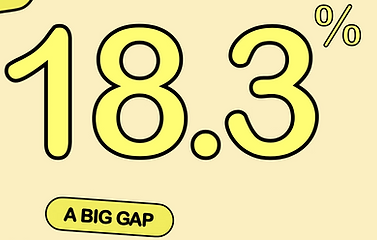
18.3% of SEND students achieved a grade 5 or above in Maths and English GCSE, compared to 58% of non-SEND students.

47 out of 94 councils were reported as having significant weakness in their SEND support.
There are growing numbers of students who have Special Education Needs or a disability. The attainment gaps between SEND and non-SEND students have raised an alarm that the education system is not adequately supporting these pupils, and therefore not being inclusive. An inclusive education is one which allows children to succeed regardless of special needs, and where all children lean in the same environment. Policymakers have a duty to ensure that no child is left behind. Our report seeks to better understand how the system which supports SEND students operates and identifies areas of weakness.